The Minnesota rule that stops a nursing home charging you more than it charges Medicaid
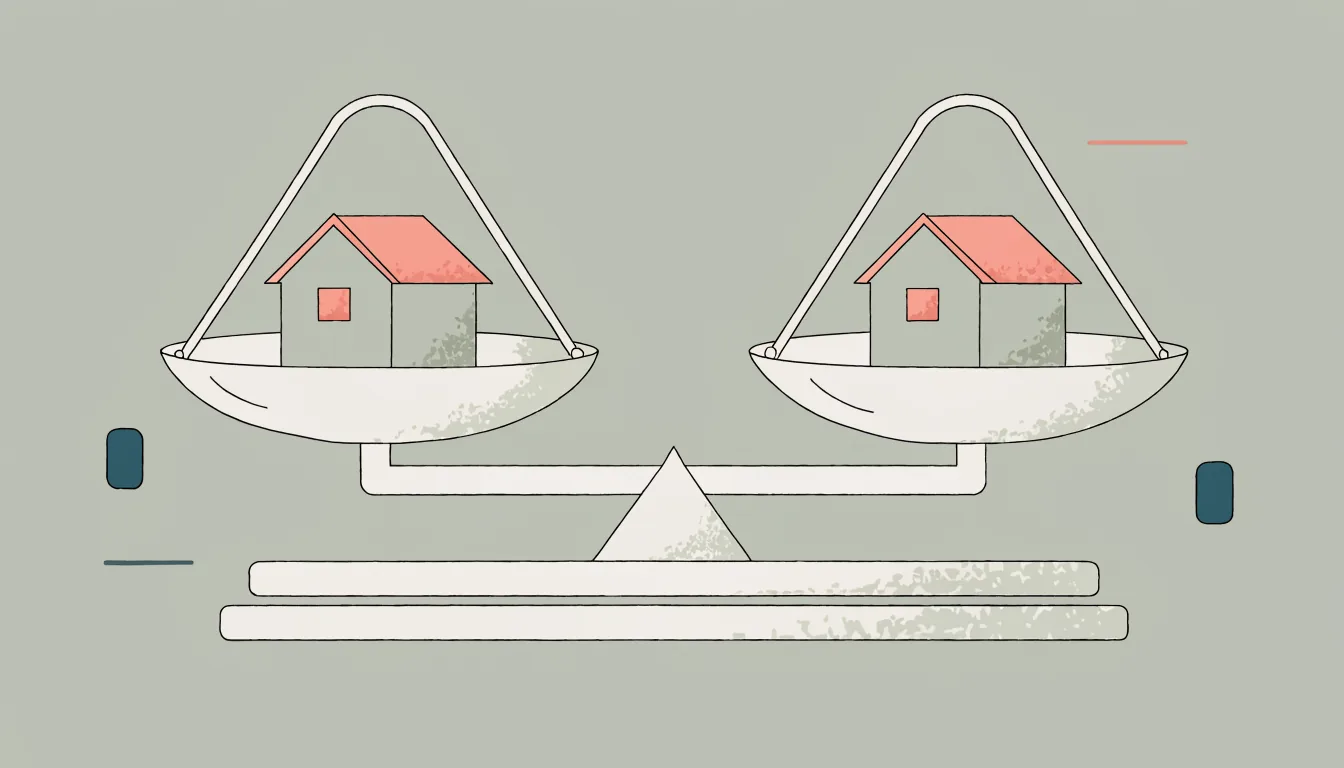
Minnesota law makes a nursing facility ineligible for Medical Assistance payments unless it refrains from charging private-paying residents more than the state-approved MA rate for similar services. Overcharging carries three times the excess plus costs and reasonable attorney fees. Minn. Stat. 256R.06, subds. 2 and 4.
 Illustration
What the law actually says
Most families assume the daily rate a nursing home quotes them is a price — something the facility decided, and something another facility might beat. In a Medical-Assistance-certified Minnesota nursing facility it is closer to a regulated tariff, and the reason is a rule almost nobody outside the industry has heard of.
The rule is called rate equalization and it lives in Minn. Stat. § 256R.06 — payments to nursing facilities. MN House Research summarises it in a sentence: Minnesota "has a rate equalization law that prohibits nursing facilities from charging private pay residents more than residents whose care is paid for by MA." Source: MN House Research, "Nursing Facility Reimbursement and Regulation" (April 2026).
The statute itself is worth reading in its own words, because the mechanism it uses is unusual and the wording matters if you ever need to rely on it.
| Provision | What the statute says | What it means for you |
|---|---|---|
| Subd. 2 headnote | Private pay rates not to exceed medical assistance residents’ rates. | The subdivision exists for exactly one purpose: to stop private-pay residents being charged a premium. |
| Subd. 2(a), the core rule | A nursing facility is not eligible to receive medical assistance payments unless it refrains from charging private paying residents rates for similar services which exceed those which are approved by the state agency for medical assistance recipients as determined by the prospective desk audit rate. | A facility that wants Medical Assistance money must charge you no more than the state-approved MA rate for the same services. The rule works as a condition of participation. |
| Subd. 2(a), the exceptions | The facility may charge more only for (1) a private room, and (2) special services not included in the daily rate, if the charge for those services is the same for MA residents. | Two things can legitimately push your bill above the MA rate — and one of them, special services, has to be priced the same for everybody. |
| Equal service requirement | Services covered by the payment rate must be the same regardless of payment source. | You cannot be given a thinner service package because you are paying privately, or the reverse. |
| Limits on special services | Special services charged separately cannot include services required for licensure or certification compliance, and residents may decline them. | A facility cannot rebadge a legally required service as an optional extra and bill you for it, and you can say no to genuine extras. |
| Subd. 4, the remedy | The damages awarded shall include three times the payments that result from the violation, together with costs and disbursements, including reasonable attorney fees. | Treble damages. If you were overcharged, the exposure is three times the excess plus costs and fees. |
Quoted and summarised from Minn. Stat. 256R.06, subds. 2 and 4 (statutory history: 2016 c 99 art 1 s 6; 1Sp2017 c 6 art 3 s 37). Read the section in full before acting on it.
What it means for your bill
Three practical consequences follow, and they are the reason this rule is worth knowing before you sign rather than after.
1. The daily rate you are quoted is not arbitrary
It is anchored to a rate the state approves for that specific facility. Two residents in the same facility receiving similar services should not be paying different daily rates because one is private-pay and one is on Medical Assistance.
2. Anything above the daily rate has to fit through one of two doors
A private room, or a genuine special service that is not part of the daily rate and is charged at the same price to Medical Assistance residents. If a line item on your bill fits neither description, that is a question to ask in writing.
3. The protection is tied to Medical Assistance participation
The statute operates by making a facility ineligible for MA payments if it overcharges private-pay residents. Minnesota does have nursing homes outside that system: as of April 2026 there were "24 nursing homes in Minnesota that are licensed by MDH, but not certified to serve MA residents—five are Minnesota veterans homes, one is the state-operated psychiatric nursing facility, and the remainder are privately owned." If MA payment is likely to matter to you eventually, confirm certification status early. Source: MN House Research, "Nursing Facility Reimbursement and Regulation" (April 2026).
And it cuts both ways
Rate equalization is not a one-directional consumer subsidy. Where a facility’s private-pay rate is lower than its Medical Assistance rate, the MA rate is reduced to match the private-pay rate. The two rates are pinned to each other, not merely capped in one direction. Source: MN House Research, "Nursing Facility Reimbursement and Regulation" (April 2026).
That symmetry is why the rule has survived: it is a cost-control measure for the state as much as a consumer protection for residents.
What the rule does not do
Rate equalization is a strong protection aimed at one specific harm. Being clear about its edges is what stops it being relied on for something it was never designed to cover.
- It does not cap the underlying rate. The Medical Assistance rate is set by a statutory formula from the facility’s own reported costs — it is not a cheap rate, and pinning your bill to it does not make nursing home care affordable.
- It does not apply to assisted living. Assisted living communities set their own rent and care-tier pricing, and nothing in chapter 144G mirrors this rule.
- It operates through Medical Assistance participation. A facility that neither seeks nor receives MA payments is outside the mechanism the statute uses, and Minnesota has 24 nursing homes licensed by MDH but not certified to serve MA residents.
- It says nothing about quality. A facility can charge a perfectly lawful rate and still have a poor inspection record — the rate rules and the quality tools answer different questions.
- It does not touch Medicare cost sharing. Medicare’s skilled nursing benefit follows a qualifying hospital stay and carries a coinsurance of $217 per day for days 21 through 100 in 2026, and it does not cover long-term custodial care at all.
Medicare figures: Medicare.gov — Skilled nursing facility care. Certification figures: MN House Research, "Nursing Facility Reimbursement and Regulation" (April 2026).
Read together, those limits point at the same practical conclusion. Rate equalization protects you from being singled out as the private payer in the building. It does not protect you from the cost of nursing home care, which in Minnesota is among the highest in the country.
If you think you were overcharged
Subdivision 4 provides a civil remedy, and the damages provision is unusually strong: "The damages awarded shall include three times the payments that result from the violation, together with costs and disbursements, including reasonable attorney fees." Source: Minn. Stat. § 256R.06 — payments to nursing facilities.
We are a Minnesota care directory, not a law firm, and this is general information rather than advice about your situation. But the practical sequence below is what makes any later conversation with a lawyer or an advocate productive, and none of it requires one to begin.
If a bill does not look right
- Get the admission agreement and every itemised bill and statement in one place, covering the whole period in question.
- Ask the facility, in writing, for its current Medical Assistance rate and for the basis of each charge above the daily rate.
- Separate the charges into three buckets: the daily rate, the private room differential, and everything else.
- For everything else, ask the specific question the statute asks: is this service included in the daily rate, and is it charged to Medical Assistance residents at the same price?
- Check whether any charge is for something required for licensure or certification compliance — the statute says those cannot be billed as separate special services.
- Call the Office of Ombudsman for Long-Term Care, free, at 1-800-657-3591. Advocacy on rates and rights is what they are for.
- Keep the paper. A treble-damages claim is arithmetic on documents you either kept or did not.
The ombudsman service is free, covers nursing homes, assisted living and adult foster care, and does not sell anything: MN Office of Ombudsman for Long-Term Care.
Where your rate actually comes from
If the private-pay rate is pinned to the Medical Assistance rate, the obvious next question is where the Medical Assistance rate comes from. The answer is a public statutory formula, and it runs on old numbers.
Minnesota uses what DHS calls the value-based reimbursement system. "The 2015 Legislature authorized a new system for nursing facility reimbursement rates, which DHS calls the value-based reimbursement system," and the first rate year under it began January 1, 2016. DHS sets rates "based on the cost of providing care to residents," subject to limits, and adjusted for case mix. Source: MN House Research, "Nursing Facility Reimbursement and Regulation" (April 2026).
The 15-month lag
Here is the part that explains almost everything about how Minnesota nursing home rates behave. In House Research’s words: "At a minimum, there is a 15-month lag between when a facility accrues a cost and when the cost is reflected in the facility’s rate." Source: MN House Research, "Nursing Facility Reimbursement and Regulation" (April 2026).
| Stage | When | What happens |
|---|---|---|
| Reporting year | October 1 to September 30 | The facility incurs and records its costs over this twelve-month window. |
| Cost report filed | February 1 | The facility files its cost report with DHS after the reporting year closes. |
| Rate year | January 1 to December 31 | The rate built from those costs takes effect and runs for a full calendar year. |
| Minimum lag | At least 15 months | The gap between a cost being accrued and that cost showing up in the rate. |
MN House Research Department, "Nursing Facility Reimbursement and Regulation," April 2026. The lag is a minimum, not an average.
Follow that through and the consequence is concrete: the daily rate a Minnesota nursing facility charges in a given calendar year is built on costs it incurred and reported before that year began. When wages or supply costs jump, the rate does not move with them; it moves later, on schedule.
What changed on October 1, 2025
Rates are adjusted for case mix — a classification of how much care residents actually need. On October 1, 2025, Minnesota transitioned from the RUG-IV case-mix classification system to the Patient-Driven Payment Model (PDPM), cutting the number of case-mix classes from 48 to 25, plus two payment classes. DHS is phasing in PDPM payment rates over several years. Source: MN House Research, "Nursing Facility Reimbursement and Regulation" (April 2026).
For residents and families, three things follow from that:
- The classification behind your rate changed recently, so a comparison between a 2025 rate and a 2026 rate is not comparing like with like.
- The change is being phased in rather than applied all at once, which means rate movements over the next few years reflect the transition as well as underlying costs.
- Because rate equalization pins private-pay rates to the Medical Assistance rate, a change in how Medical Assistance classifies residents eventually reaches private-pay bills too.
None of that is a reason to expect a particular rate to rise or fall. It is a reason to ask a facility to explain a change in your rate rather than assume it is discretionary — in Minnesota, usually it is not.
Minnesota nursing homes in numbers
The context that makes all of the above matter. Every figure here is from MN House Research, April 2026. Source: MN House Research, "Nursing Facility Reimbursement and Regulation" (April 2026).
| Figure | Value | As of |
|---|---|---|
| MA-certified and state-licensed nursing facilities | 328 | January 28, 2026 |
| Active beds | 23,158 | January 28, 2026 |
| Average statewide occupancy | 81.7% | 2024 reporting period |
| Share of all nursing facility days paid by Medical Assistance | Just under 54% | 2024 reporting period |
| Monthly average MA recipients in nursing facilities | 11,284 | Fiscal year 2025 |
| State share of MA spending on nursing facilities | $544.9 million | Fiscal year 2025 |
| Minnesota FMAP for covered services | 50.68% federal, 49.32% state | Federal fiscal year 2026 |
| Licensed by MDH but not MA-certified | 24 facilities | April 2026 |
MN House Research Department, "Nursing Facility Reimbursement and Regulation," April 2026. "Active beds" is a different measure from licensed beds — do not mix the two.
Against that, the private-pay price: the 2024 Minnesota medians were $146,000 a year for a semi-private room and $168,813 for a private room, about $12,167 and $14,068 a month, ranking Minnesota 15th and 13th in the country. Source: Genworth, 2024 Cost of Care Survey — Minnesota.
With just under 54% of all nursing facility days paid by Medical Assistance, rate equalization is not a fringe rule affecting a handful of bills. It sets the reference point for the whole market.
All nursing facilities in Minnesota must be licensed by MDH, with qualifications for licensure set out in Minn. Stat. ch. 144A — Nursing Homes and Home Care. That is a different chapter from the one governing assisted living, which is the subject of assisted living vs nursing home in Minnesota.
How to check a facility before you sign
Rate equalization protects you from one specific harm. It says nothing about the quality of care, so use the free public tools as well.
Check all four, in this order
- License: verify the nursing facility license directly with the Minnesota Department of Health.
- Certification: confirm whether the facility is certified for Medical Assistance, especially if MA is likely to pay eventually.
- Findings: read MDH complaint and survey findings for the facility, not just the summary rating.
- Ratings: check the Minnesota Nursing Home Report Card and the federal Medicare Care Compare star ratings, and treat a disagreement between them as a prompt to read the underlying findings.
Start here: MDH — Verify a Facility License, Minnesota Nursing Home Report Card (DHS), and Medicare Care Compare. A step-by-step walkthrough of all of them, including which tool answers which question, is in how to check a Minnesota care provider’s license, inspections and ratings.
One eligibility point to plan around: for Medical Assistance to pay, an enrollee must "be screened by a long-term care consultation team" and "be determined by the team to need nursing facility-level care." That screening is a gate, and it takes time. Source: MN House Research, "Nursing Facility Reimbursement and Regulation" (April 2026).
Where to look next
Browse Minnesota nursing homes and skilled nursing facilities, or narrow by place — Saint Paul, Duluth, or Hennepin County. Each listing shows the license status we hold, with the number itself on verified listings.
If the wider question is how a nursing home stay gets funded at all, read how to pay for long-term care in Minnesota. If you are weighing a nursing home against assisted living, what assisted living actually costs in Minnesota puts the two price tags side by side.
Questions people ask
Can a Minnesota nursing home charge private-pay residents more than Medicaid pays?
No. Minn. Stat. 256R.06 subd. 2(a) makes a nursing facility ineligible for Medical Assistance payments unless it refrains from charging private-paying residents rates for similar services that exceed the state-approved MA rate, as determined by the prospective desk audit rate. Minnesota calls this rate equalization.
Source: Minn. Stat. § 256R.06 subd. 2
What are the exceptions to Minnesota rate equalization?
Two. A facility may charge more for a private room, and for special services not included in the daily rate — but those special services must be charged to Medical Assistance residents at the same rate. Services required for licensure or certification compliance cannot be billed separately, and residents may decline optional special services.
Source: Minn. Stat. § 256R.06 subd. 2
What happens if a Minnesota nursing home overcharges a private-pay resident?
Minn. Stat. 256R.06 subd. 4 provides that damages awarded shall include three times the payments resulting from the violation, together with costs and disbursements, including reasonable attorney fees. Keep the admission agreement and every itemised bill, and contact the Office of Ombudsman for Long-Term Care at 1-800-657-3591.
Source: Minn. Stat. § 256R.06 subd. 2
Does rate equalization ever work against residents?
It works in both directions. Where a facility charges private-pay residents less than its Medical Assistance rate, the MA rate is reduced to match the private-pay rate. The two rates are pinned to each other rather than one simply being capped by the other, which is why the rule also functions as state cost control.
Source: MN House Research, "Nursing Facility Reimbursement and Regulation" (April 2026)
How does Minnesota set nursing home rates?
Through the value-based reimbursement system authorised by the 2015 Legislature, first effective for the rate year beginning January 1, 2016. DHS sets each facility rate from its own reported costs, subject to limits and adjusted for case mix. There is at minimum a 15-month lag between a facility incurring a cost and that cost reaching its rate.
Source: MN House Research, "Nursing Facility Reimbursement and Regulation" (April 2026)
What changed for Minnesota nursing home case mix in October 2025?
On October 1, 2025 Minnesota moved from the RUG-IV case-mix classification system to the Patient-Driven Payment Model, reducing case-mix classes from 48 to 25 plus two payment classes. DHS is phasing in PDPM payment rates over several years, so rate movements during the transition reflect the change as well as underlying costs.
Source: MN House Research, "Nursing Facility Reimbursement and Regulation" (April 2026)
Does rate equalization apply to assisted living in Minnesota?
No. It applies to nursing facilities, and it works by conditioning Medical Assistance payment. Assisted living communities set their own private-pay rent and care-tier pricing. The Elderly Waiver rate limits cap what the state will pay for services in assisted living — not what a community may charge a private-pay resident.
Source: Minn. Stat. § 256R.06 subd. 2
Sources
- Minn. Stat. § 256R.06 subd. 2
- Minn. Stat. § 256R.06 — payments to nursing facilities
- MN House Research, "Nursing Facility Reimbursement and Regulation" (April 2026)
- Genworth, 2024 Cost of Care Survey — Minnesota
- Minn. Stat. ch. 144A — Nursing Homes and Home Care
- Minnesota Nursing Home Report Card (DHS)
- Medicare Care Compare
- MDH — Verify a Facility License
- MN Office of Ombudsman for Long-Term Care
This guide was last checked against these sources on August 14, 2026. RightCare MN is a Minnesota care directory, not a clinical, legal, or financial adviser — this is general information, not advice about your situation. Programs, rates, and rules change; confirm anything you are relying on with the agency directly before you act on it.